Category: Guide
-
Understanding ARRs / RFRs with Calculation Examples & System Implementation – Part 2 of 2

I. Recap & Expanded Context We already covered: This section drills into calculation methodologies, formula examples, and system behavior related to overnight ARR-based interest calculations. II. Interest Calculation Approaches for ARRs / RFRs Many ARRs are backward-looking, and thus the interest is often calculated only near or after the end of the interest period. Several Read more
-
Guide to Alternative Reference Rates (ARR): From LIBOR to Risk-Free Rates and Term Benchmarks – Part 1 of 2
Introduction This guide is designed to educate market participants, analysts, legal teams, and operations professionals on the transformation of global interest rate benchmarks—from legacy indices like LIBOR to modern, transaction-based Alternative Reference Rates (ARRs), including Risk-Free Rates (RFRs) and emerging Term Rates. We explore the historical context, rationale for reform, technical differences between rates, and Read more
-
Private Credit: A Comprehensive Guide to Direct Lending and Syndicated Structures
Introduction: Private Credit Syndicated Loans – A Training Guide Private credit is one of the fastest-growing segments of global capital markets, yet it remains one of the most opaque and complex. Unlike broadly syndicated loans (BSLs) or traditional bank financing, private credit transactions are negotiated privately, customized heavily, and operated in a world outside public Read more
-
Non Pro Rata in Syndicated Loans: Training Guide

Introduction In syndicated lending, the default expectation is that all lenders in a loan facility share in principal repayments, interest, fees, and amendments pro rata—meaning, based on their respective percentage ownership. However, in practice, non pro rata situations arise frequently due to changes in lender participation, amendments, trading behavior, or operational execution. This guide focuses Read more
-
Payment‑in‑Kind (PIK) Trading & Agent Bank: Training Guide Part 2

This is the second guide in the series on Payment-in-Kind (PIK). Readers are encouraged to review the initial guide, “Payment-in-Kind (PIK) Interest: Training Guide,” beforehand, as this guide builds upon and partially overlaps with the content covered there. Table of Contents What is “PIK” in Loans & “PIK Traveling Free” PIK = Payment‐in‑Kind interest Because Read more
-
Payment‑in‑Kind (PIK) Interest: Training Guide

Introduction Payment-in-Kind (PIK) interest is a specialized financing mechanism often used in syndicated loans, mezzanine debt, and private credit markets. Rather than requiring periodic cash interest payments, PIK structures allow the borrower to defer interest by capitalizing it—adding it to the principal balance of the loan. While this can provide strategic flexibility during capital-intensive ramp-up Read more
-
Why Understanding Finance Matters

Finance touches every part of our lives, whether we realize it or not. From the moment we open a bank account or receive our first paycheck, we engage with financial systems that influence our daily decisions. Managing personal budgets, paying bills, saving for the future, or running a business all rely on a fundamental understanding Read more
-
Building a Robust, Scalable, and Profitable Business in Syndicated Loans and Investment Management

In the world of syndicated loans, investment management, and finance, success hinges on a few critical factors: data integrity, technological enablement, knowledgeable professionals, and continuous improvement. These elements serve as the foundation for growing and scaling a business while maintaining profitability. The adage “garbage in, garbage out” is particularly relevant here—poor data leads to poor Read more
-
Mezzanine Debt & Subordinated Lending: A Private Equity/Debt Guide
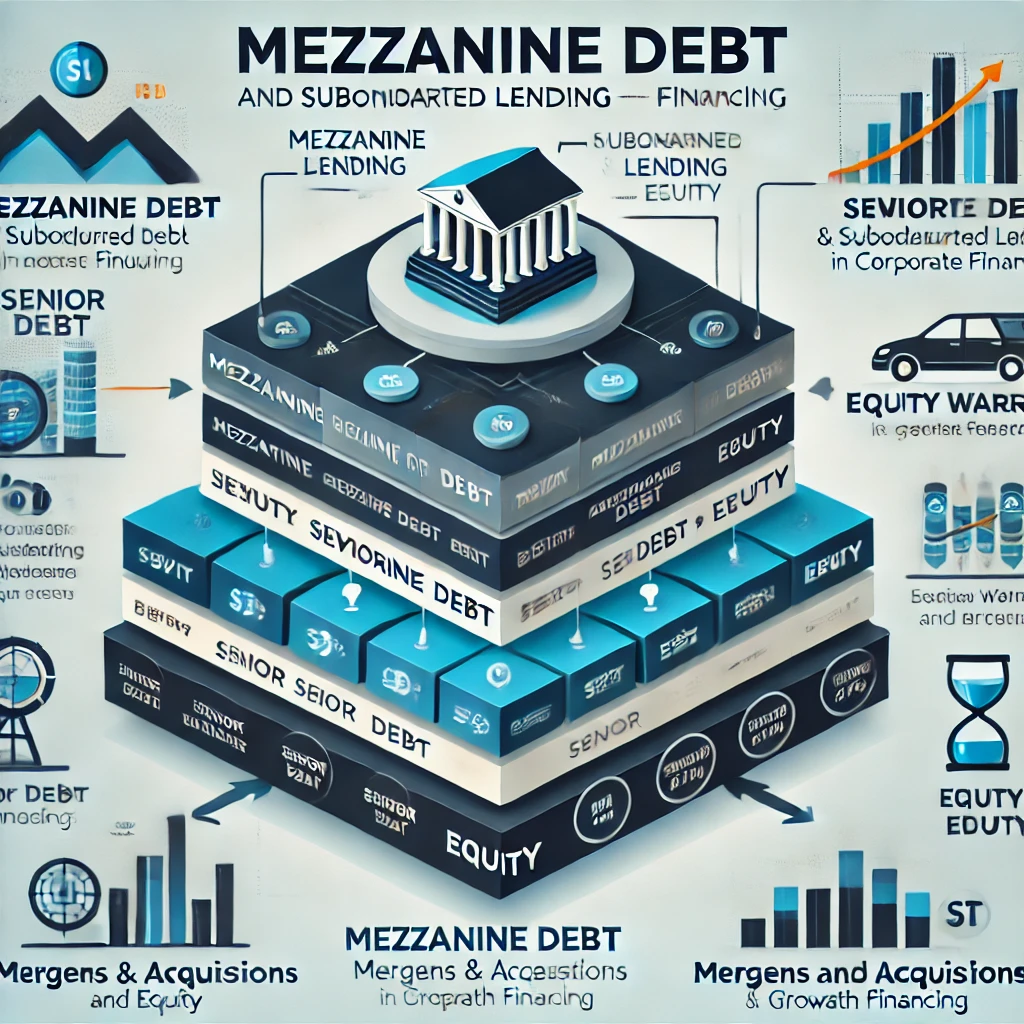
In private equity and corporate financing, businesses often need capital beyond what traditional bank loans can provide. Mezzanine debt serves as a hybrid financing tool, blending elements of senior debt and equity to offer flexibility while balancing risk and return. Understanding its structure, repayment priority, and implications in default is key for both borrowers and Read more